
 09124052973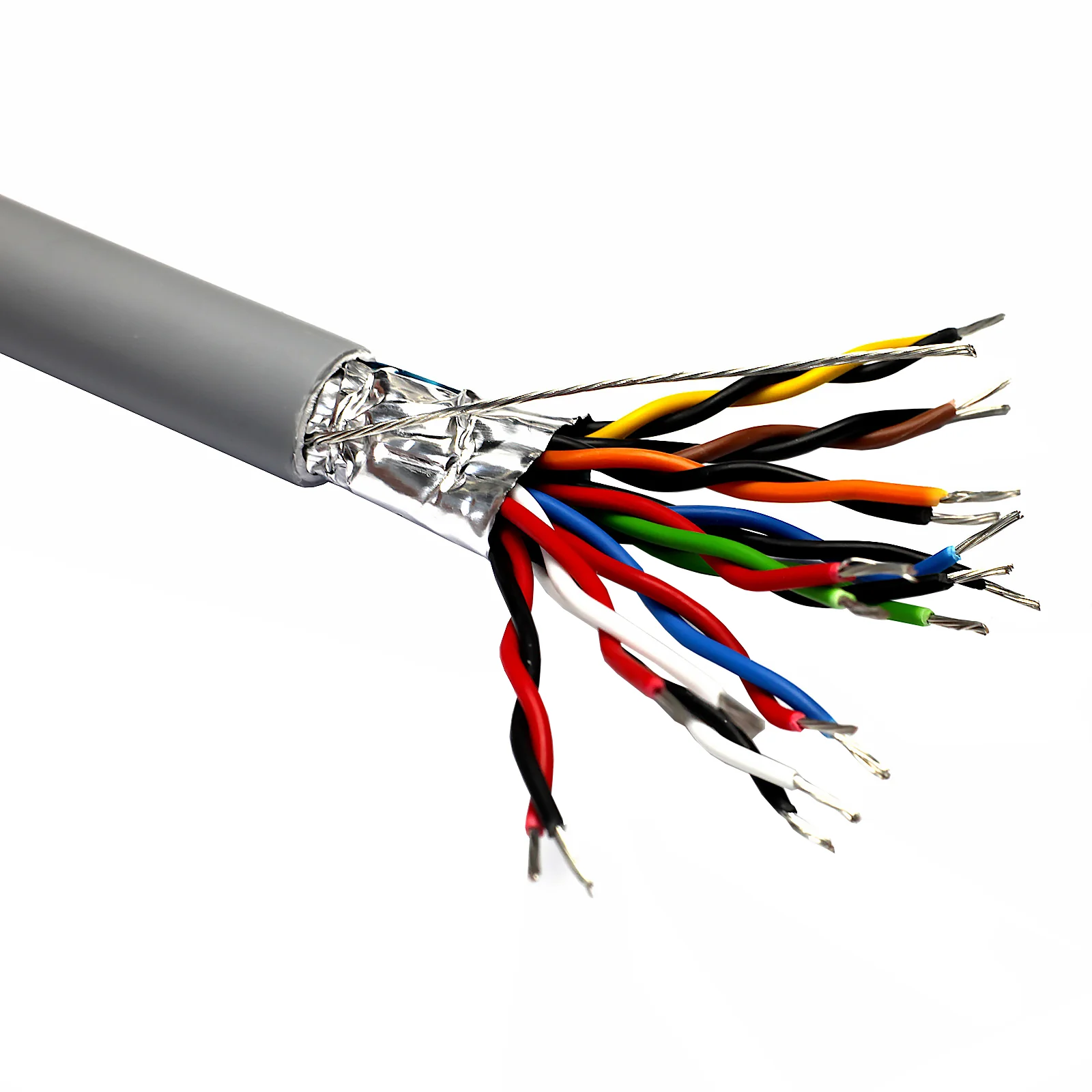
-
Technical Section
Product Name: “Noan‑G10F” Underground Telephone Cable
Application: Underground telephone lines with ten simultaneous pairs, suitable for underground paths, ducts, and indoor environments requiring protection against noise and environmental conditions.
Internal Structure
-
Conductor: CCAM (Copper‑Clad Aluminum) with 60/0 structure (60 very fine strands)
-
Effective Conductor Area: Designed according to project requirements (e.g., approximately ~0.13 mm² or ~0.17 mm²)
-
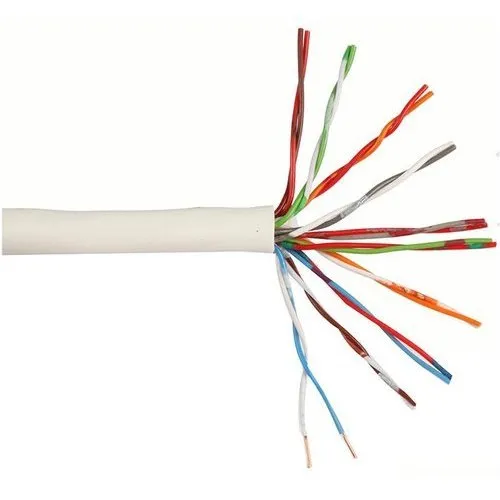
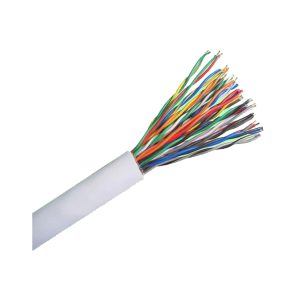
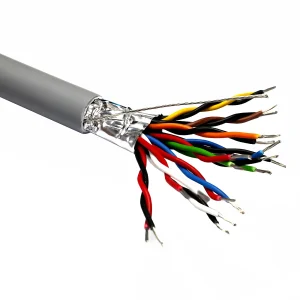
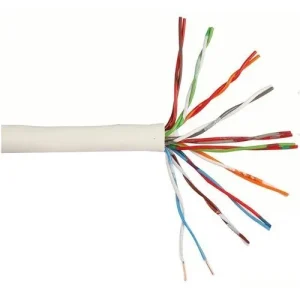
Pair Structure: Ten twisted pairs
-
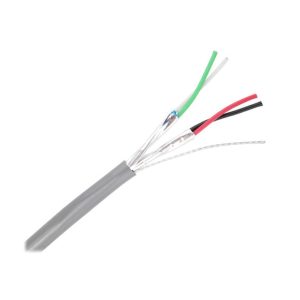
Shield: Laminated aluminum foil longitudinally wrapped around the core assembly (100% coverage)
-
Drain Wire: Auxiliary conductor (copper or tinned copper) for connecting the shield to ground
-
Insulation per Conductor: PVC or PE suitable for underground use
-
Outer Jacket: UV-resistant PVC or composite for outdoor installation
Electrical and Performance Specifications
-
Conductor Diameter: According to a similar 10-pair reference cable with ~0.60 mm conductors
-
Conductor Resistance at 20 °C (Max): ≤ 186 Ω/km for ~0.60 mm conductor
-
Insulation Resistance (Min): ≥ 5000 MΩ·km
-
Test Voltage: AC 1500 V (1 min) / DC 2250 V (1 min) without breakdown
-
Operating Temperature: ‑20 °C to +60 °C
-
Capacitance and Impedance: Twisted pair design minimizes crosstalk and pair-to-pair interference
-
Minimum Bending Radius: 10× the overall cable diameter (or according to manufacturer guidelines)
Installation and Maintenance Notes
-
Install in ducts, underground, or protected pathways
-
Protect passage points with clamps or protective sleeves
-
Connect shield to ground at a single point for optimal performance
-
Maintain bending radius and avoid sharp bends
-
After installation, perform insulation resistance and line performance tests
-
Content Section
Ten-Pair Shielded Underground Telephone Cable “Noan‑G10F”
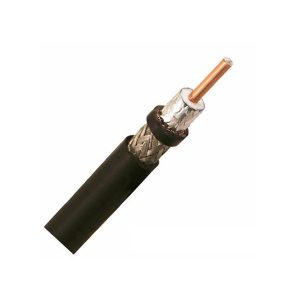
Noavar Niroo Paytakht Company is proud to introduce the “Noan‑G10F” cable; this “ten-pair underground telephone cable with full foil shielding” is designed for indoor and underground environments requiring simultaneous transmission of multiple telephone lines. Lightweight CCAM conductors with 60/0 strand structure, combined with proper insulation and aluminum shielding, ensure high performance against environmental interference. The “Noan‑G10F” cable is suitable for urban or intercity projects needing multiple telephone lines along an underground path, providing environmental durability, stable signals, and reliable performance.
Key Features:
-
Ten twisted pairs
-
Full foil shield around the core assembly
-
Lightweight CCAM conductors with 60/0 structure
-
Robust design for indoor and underground installation
-
High insulation resistance
-
Reliable performance in various environmental conditions
-
Description, Applications, and Comparative Analysis
Suitable Applications:
-
Underground telephone lines with a high number of pairs
-
Underground or in-structure routes in telecom projects
-
Areas with high electromagnetic interference potential
-
Urban or rural areas requiring multiple lines in a single path
Advantages:
-
Supports multiple telephone lines simultaneously without separate cables
-
Effective protection against environmental noise thanks to foil shielding
-
Reduces installation cost by using a single cable for multiple pairs
-
Lighter weight and lower cost compared to fully copper cables
Disadvantages:
-
Higher conductor resistance than fully copper cables
-
Shield performance reduces if grounding is not correctly implemented
-
Precise installation and adherence to standards are critical
-
Signal loss may be noticeable over longer distances
Comparison with Lower-Pair Models:
-
Compared to one- or two-pair cables, the ten-pair cable has higher core density, which may increase crosstalk; precise twisted pair length and continuous foil are essential
-
Production cost is relatively higher, but the benefit of transmitting multiple lines in a single cable is significant
Quality Assurance and Production Control:
-
Accurate strand count (60 strands) and uniformity of conductors
-
Ensured foil thickness, adhesion, and quality
-
Insulation testing, thermal aging, mechanical and vibration testing for samples
-
Product name, company name, technical specifications, and production date printed on the cable
-
Delivery of insulation resistance and performance test reports to the customer
Reviews
There are no reviews yet.